

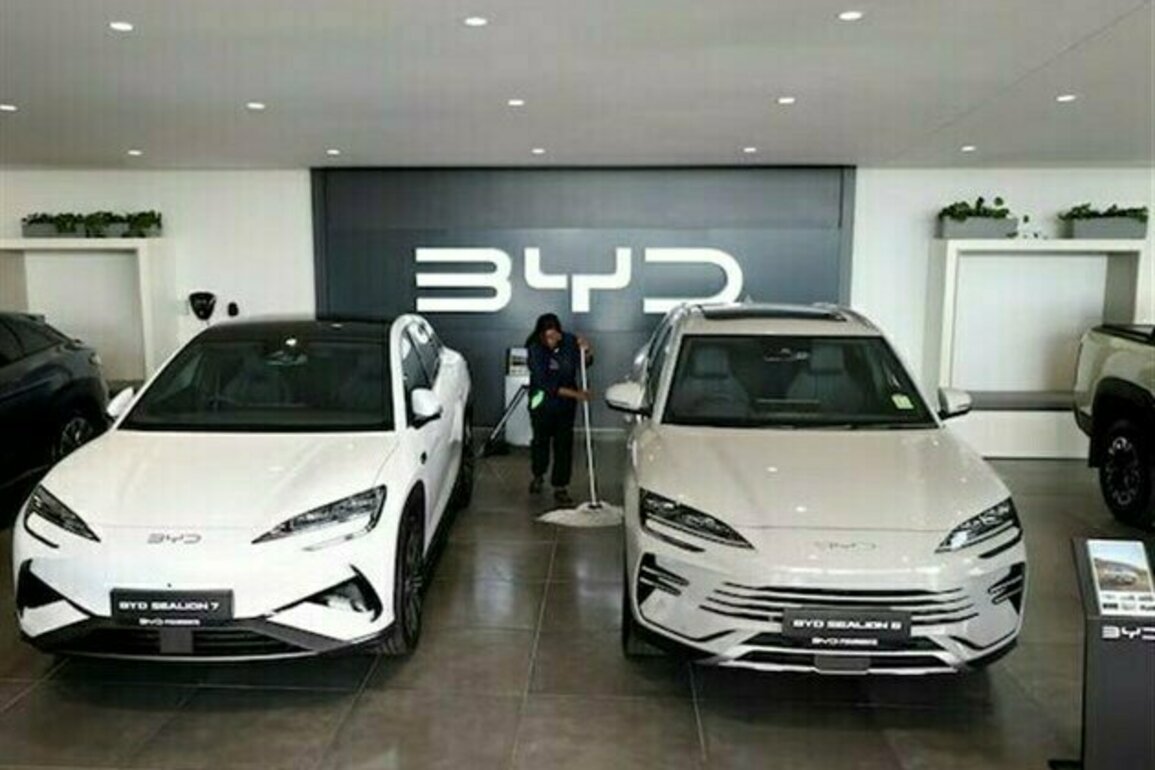
TEHRAN (Tasnim) Chinese EV makers led by BYD are undercutting Tesla in the race for self-driving technology, offering advanced driver-assistance systems at lower costs amid growing pressure on Elon Musks strategy shift toward autonomy.
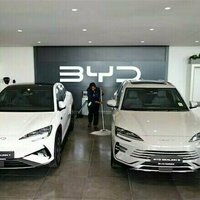
- Economy news -Chinese electric vehicle manufacturers, led by BYD, have surpassed Tesla in the production of affordable EVs.
Now, these same companies are challenging Tesla in the global pursuit of autonomous driving technology.
Earlier this year, BYD disrupted Chinas smart-EV market by including its Gods Eye driver-assistance system as a free feature.
Tesla sells a comparable system in China for nearly $9,000.
Gods Eye makes Tesla's strategy fall apart, said Taylor Ogan, a Shenzhen-based investor at Snow Bull Capital.
Ogan, a former Tesla owner, described BYDs system as more capable than Teslas Full Self-Driving (FSD).
Other Chinese firms like Leapmotor and Xpeng are also offering FSD-like systems in EVs priced around $20,000.
These advances are supported by Chinese government policy and subsidies.
Analyses commissioned by Reuters show that BYDs hardware costs for assisted driving are lower than Teslas.
BYD uses radar and lidar sensors, which Tesla omits in favor of a camera-based AI system.
The growing competition is a significant issue for Tesla CEO Elon Musk, who is shifting focus back to business as global sales decline.
This month, Tesla is set to trial robotaxis in Austin, Texas, using a small fleet of 10 to 20 vehicles.
Musk has acknowledged Chinese firms as the most competitive globally.
Tesla scrapped plans for a $25,000 EV last year and instead placed its future on robotaxis.
Now, Chinese rivals are threatening this new strategy.
Tech firms like Huawei are supplying autonomous systems to major automakers including Chery, SAIC, and Changan.
Huaweis M9 SUV, made with Seres, demonstrated its capabilities during a Reuters test drive in Shenzhen.
The vehicle navigated city streets and executed complex maneuvers without driver intervention.
At Aprils Shanghai auto show, Huawei and other firms such as Zeekr and Xpeng showcased progress toward Level 3 autonomy.
Beijing is planning a certification regime for such systems following a fatal Xiaomi crash.
Huawei stated it is ready to meet the new standards.
Zeekr, a Geely brand, also plans to launch Level 3 vehicles soon.
Tesla has not yet released an unsupervised FSD version.
Its system still requires constant driver attention.
Teslas robotaxi program in Austin remains vague, though it aims to operate in limited areas of the city.
Chinese EV makers are progressing rapidly in assisted driving.
BYD offers an FSD-equivalent system on vehicles starting at $30,000, while Teslas cheapest comparable model in China costs $41,500.
A2MAC1, a Paris-based teardown firm, found BYDs Gods Eye costs $2,105 to buildless than Teslas $2,360 FSD system.
BYD uses 12 cameras, five radars, 12 ultrasonic sensors, and one lidar unit, while Tesla uses only cameras and two AI chips.
Sensor prices are 2040% cheaper in China than in the USor Europe.
Economies of scale and reduced margins have driven those savings, said A2MAC1 engineer Elena Zhelondz.
BYDs gross margin is likely to fall, but giving away Gods Eye could drive higher sales, said Chris McNally of Evercore.
Falling behind on autonomy would deepen Teslas difficulties in China, where it is already losing share to lower-cost rivals.
More BYD vehicles on roads also mean more data to train AI systems.
BYD has a clear and ongoing market-share driving advantage, said McNally.
He added that offering Gods Eye for free could widen this gap.
BYD's scale has also helped reduce costs.
In November, a BYD executive told suppliers the company sold 4.2 million vehicles in the previous yearover twice Teslas total.
Citing innovation, scale, and low-cost supply chains, the executive called for a 10% across-the-board price cut on parts for the new year.
He described 2025 as a knockout round in Chinas EV competition.