

WASHINGTON (CN) - The Supreme Court upheld a private-sector solution to nuclear waste storage on Wednesday, ruling that the state of Texas and a minerals holding company were not entitled to sue over an independent regulatory board's move to license such a facility in the Lone Star State.
In the 6-3 ruling, the justices overturned the Fifth Circuit's judgment and held that Texas and Fasken Land and Minerals did not have legal standing to challenge Interim Storage Partners' proposed facility in the state's western reaches because they did not participate in licensing proceedings before the Nuclear Regulatory Commission.
But the high court declined to weigh in on whether the country's civilian nuclear power regulator had statutory authority to license a privately owned away-from-reactor storage facility in the first place.
Interim Storage Partners, a joint venture between Texas-based Waste Control Specialists and French nuclear giant Orano, wants to build a temporary waste site for civilian nuclear power facilities in Andrews County, Texas, near an existing low-level radiological waste disposal facility operated by Waste Control Specialists.
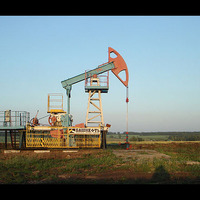
The project would store thousands of tons of spent nuclear fuel - roughly half of the current U.S. stockpile - above Texas' Permian Basin, a productive oil field and the only source of safe water for hundreds of miles.
After investing millions in the licensing process, the Nuclear Regulatory Commission - an independent board created by Congress to regulate the civilian possession and use of radioactive materials - gave Interim Storage Partners permission in 2021 to move forward with the first private spent nuclear waste facility.
But Texas and Fasken, which owns land in the Permian Basin, sued to block the license. The Fifth Circuit in 2023 ruled that federal law did not give the commission authority to greenlight either the ISP project or a separate facility in New Mexico proposed by New Jersey-based nuclear services company Holtec International.
Private companies warned the justices that allowing Texas' last-minute intervention to block the waste facility would create uncertainty in the nuclear sector and discourage investment.
On Wednesday, the Supreme Court held that Texas and Fasken shouldn't have been able to sue over the ISP facility's legality at all.
The justices concluded that federal law specifies only a "party aggrieved" by a commission order can seek judicial review. Justice Brett Kavanaugh, a Donald Trump appointee, wrote the majority opinion.
Texas and Fasken, he wrote, did not meet that standard - both parties had submitted comments to the commission on a draft environmental impact statement for the proposed ISP site, but neither had been formally admitted by NRC as intervening parties in licensing proceedings.
Fasken in particular had applied for intervening status but was denied by the commission. The company has argued that the NRC erroneously denied its petition, and has sued the agency in the D.C. Circuit over that decision. That court, though, rejected Fasken's complaints.
The justices held that the minerals company could not use a separate suit to "collaterally attack" the D.C. Circuit's ruling.
And the Supreme Court also threw out an argument from Texas and Fasken that they did not need to be parties to the NRC's licensing proceeding if the agency had acted ultra vires, or outside of its legal authority.
The justices said the petitioners "basically dress up a typical statutory authority argument as an ultra vires claim," and that such review wasn't available to them in this situation because there was "adequate opportunity" for judicial review of the NRC's decision to deny them intervenor status.
Because Texas and Fasken did not have standing to sue the commission over the proposed ISP site, though, the Supreme Court sidestepped offering any opinion on whether the NRC legally approved the project's federal license.
The proposed Andrews County facility would only be a temporary solution, ISP has said, filling the gap while the federal government struggles to find a permanent location to store the country's spent nuclear fuel inventory.
But opponents of the project, including Texas, have countered that the site would be a de facto permanent waste repository foisted upon a community without its consent and in violation of state law - Texas Governor Greg Abbott in 2022 signed a bill outlawing the storage of high-level radioactive waste in the Lone Star State.
Justice Neil Gorsuch, who authored the Supreme Court's dissenting opinion Wednesday, echoed those complaints. Justice Clarence Thomas, a George H.W. Bush appointee, and Justice Samuel Alito, a George W. Bush appointee, joined Gorsuch.
"Radioactive waste poses risks to the state, its citizens, its lands, air and waters, and it poses dangers as well to a neighbor and its employees," the Trump appointee wrote. "But the court insists, the agency never admitted Texas or Fasken as 'parties' in a hearing it held before issuing ISP's license - and that's the rub."
Gorsuch went so far as to proclaim that the NRC's decision to license the proposed west Texas facility was unlawful and rejected the argument that Texas and Fasken had not adequately participated in agency-level proceedings because they hadn't been admitted as intervenors.
"Both Texas and Fasken participated actively in other aspects of the NRC's licensing proceeding," he said. "No more is required for them to qualify as 'parties aggrieved' by the NRC's licensing decision. Both are entitled to their day in court - and both are entitled to prevail."
There is no permanent repository for the nearly 100,000 tons of spent nuclear fuel stranded at civilian nuclear power plants across the country. Nuclear industry experts have long said that the used fuel rods, kept in cladded concrete casks, are safe where they are, but that a long-term storage solution remains necessary.
In the 1980s, Congress designated Yucca Mountain, a site in Nye County, Nevada, as one of two future locations to permanently store the thousands of tons of spent nuclear fuel generated by the U.S. reactor fleet.
Decades of political pressure from Nevada lawmakers put Yucca Mountain in suspended animation. In 2010, former President Barack Obama pulled the proposed repository's funding. Despite an attempt by the Trump administration to restart the project, Yucca Mountain has remained little more than a hole in the ground for more than a decade.
Licensing the Andrews County facility marked a major move in the dormant federal effort to safely dispose of nuclear waste until Texas and a group of oil and gas companies stepped in.
Under the Joe Biden administration, the Department of Energy began examining possibilities for what it called a "consent-based siting" agreement under which it would vet willing candidates for a federal consolidated interim storage facility - a step toward a permanent storage solution.
It's unclear whether the second Donald Trump administration will continue that effort, but Republican members of Congress have already kicked around the idea of restarting the Yucca Mountain project.
Source: Courthouse News Service